Lamination 101: Office Max vs. Production Pros & Why Texture Changes Everything
Lamination 101: Office Max vs. Professional Laminating Services & Why Texture Changes Everything
A Complete Guide to Large Format Lamination, Textured Finishes & Industrial Laminating
What Is a Textured Lamination Poster?
A textured lamination poster features a laminated finish with physical texture such as linen, canvas, leather, or soft-touch that adds depth and a tactile feel to your prints. Unlike standard gloss or matte laminates, textured lamination posters hide fingerprints, reduce glare, and create a premium, art-like appearance. Perfect for retail displays, art prints, menus, and luxury marketing materials. Explore our textured lamination options →
If you have ever created a poster, sign, or important document, you have probably asked yourself:"Does this need to be laminated?"
Lamination is the best way to protect your investment, enhance colors, and give your project a professional feel. But not all laminating services are created equal.
In this Lamination 101 guide, we are going to cover two critical questions:
- When should you use retail lamination services at Office Max or FedEx Office?
- When should you call a dedicated production laminator for large format lamination ?
- What type of laminate film should you actually use—including gloss, matte, satin, and textured laminates ?
Let's dive in.
Part 1: The Retail Run (Office Max / FedEx Office)
Big box print shops are convenient. They are on every corner, and they offer lamination as a service. For basic projects, they are a fine option for simple document lamination .
When to go retail:
- Single School Projects:Your kid needs their science fair poster board laminated by tomorrow morning.
- Standard Letter Size:A few 8.5" x 11" menus or certificates.
- Instant Gratification:You need it done in the next hour while you shop for pens.
The Catch:Retail stores typically use thermal pouches or basic roll laminators designed for small format, low-volume work. They simply cannot handle large format lamination or industrial laminating requirements.
Part 2: The Pro Move (Calling a Professional Laminating Company)
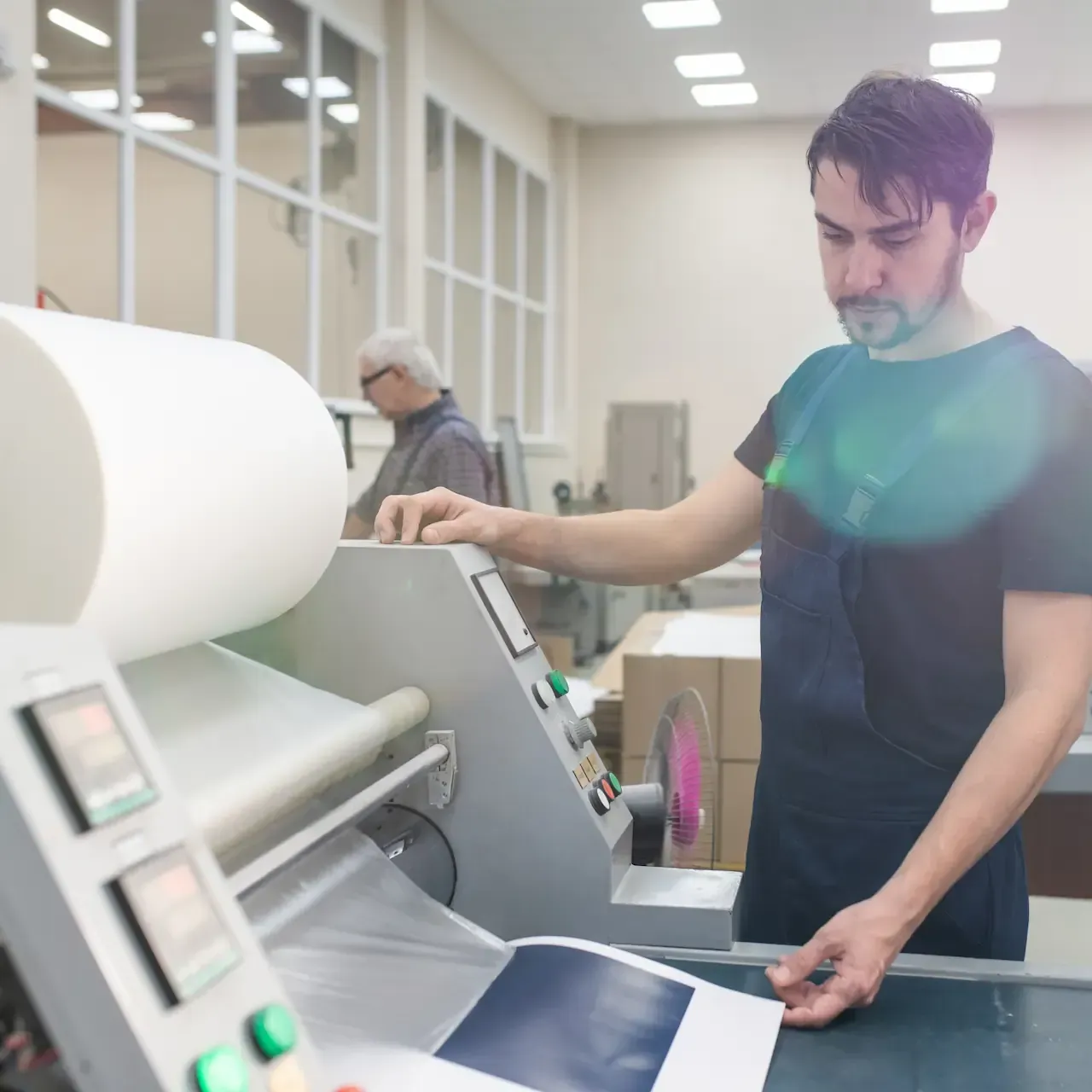
This is where we come in. When your project shifts from "craft project" to "business asset," you need production-grade equipment and materials from a trusted laminating company .
When to call a production laminator (like us):
1. Large Format Lamination
If your project is wider than 24 inches or longer than a standard sheet of paper, retail stores usually can't handle it. We specialize in large format lamination —think trade show banners, window clings, and oversized posters.
2. High Volume Runs
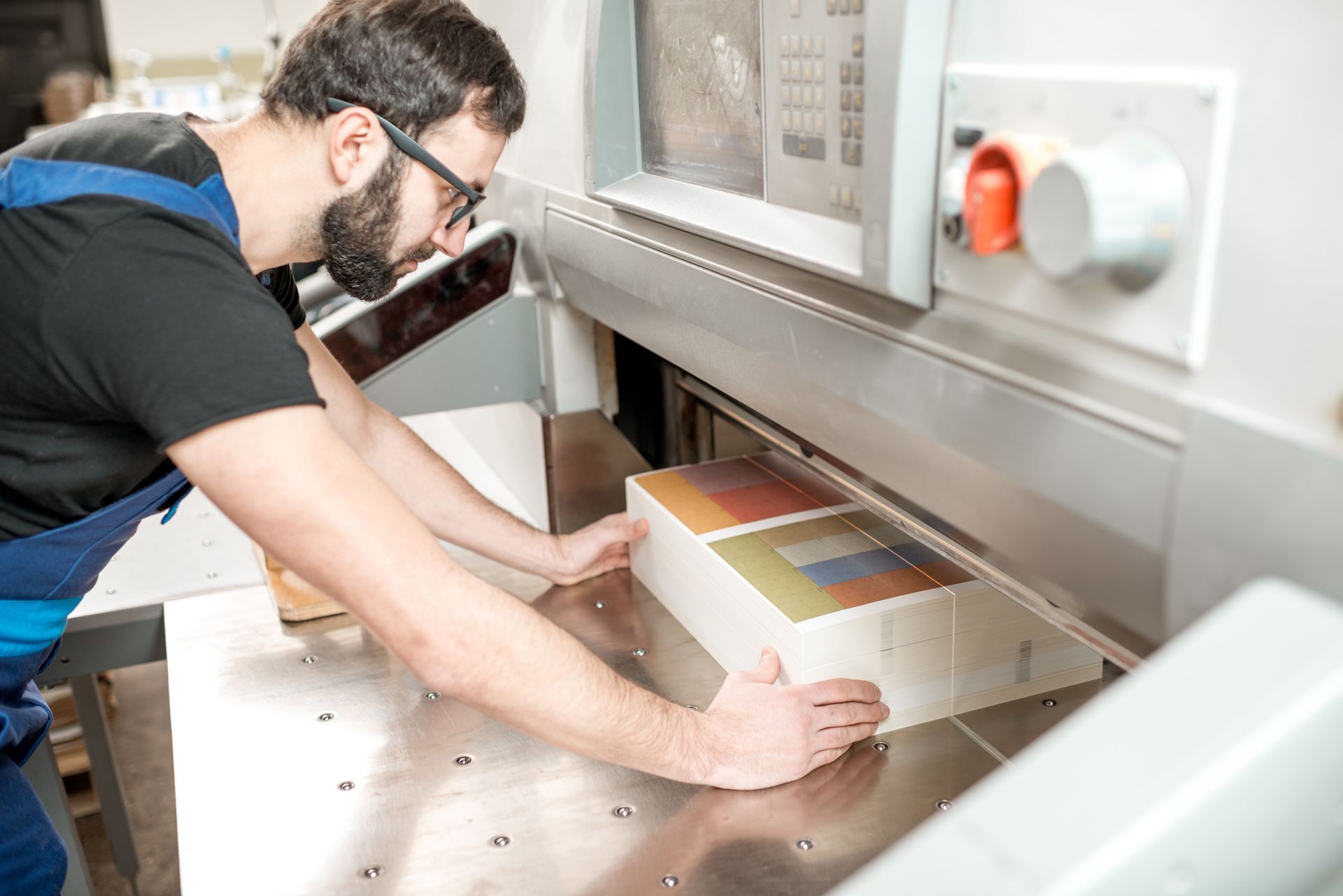
Professional laminating services use automated heated rollers that encapsulate items quickly and consistently. Whether you need bulk lamination for restaurant menus or commercial laminating for marketing materials, we deliver efficiency at scale.
3. Durability Requirements
If your print is going outside, on the floor, or near heat, you need specific films. We stock commercial-grade films designed for extreme conditions, including uv protection lamination and weather-resistant laminates.
Part 3: The "Secret Menu" of Lamination Types
To understand lamination options, we need to break down the actual products available.
1. Thermal Lamination vs. Pressure-Sensitive
- Thermal:Uses heat to activate an adhesive. Best for indoor signs and rigid signage.
- Pressure-Sensitive:Uses a sticky backing activated by rollers. Essential for items that can't handle heat.
2. The Finish: Gloss, Matte, and Satin
- Gloss:Adds pop and vibrancy. Great for photography and advertising.
- Matte:Reduces glare. Perfect for text-heavy documents and art prints.
- Satin/Luster:The Goldilocks—a soft sheen that isn't too shiny or too flat.
3. The Game Changer: Textured Laminates for Posters & Prints
This is where we separate the amateurs from the pros. If you want your project to stand out, you need to consider textured laminates . A textured lamination poster physically changes the surface of your print, offering unique lamination finishes that elevate your brand.
The Added Benefits of Textured Laminates:
- Hide Imperfections:Textures like Linen, Canvas, or Leather do a phenomenal job of hiding minor scratches and fingerprints.
- Tactile Experience:A business card with a soft-touch laminate feels expensive. A textured lamination poster with canvas texture actually looks and feels like a painting.
- Anti-Skid:Certain textured laminates for floor graphics provide slip resistance.
- Anti-Glare:Textured surfaces scatter light, drastically reducing glare on posters hung in bright windows.
Part 4: Choosing the Right Lamination Services
To summarize your Lamination 101 journey, ask yourself these three questions:
How big is it?
- Smaller than 24" and a one-off? Retail is fine.
- Larger than 24"? Call a Production Laminator for large format lamination.
Where is it going?
- Indoors, out of the sun? Standard thermal is fine.
- Outdoors, on the floor, or handled frequently? Ask us about industrial-grade or textured laminates.
How should it feel?
- Smooth and shiny? Gloss.
- Elegant and glare-free? Matte.
- Like a piece of art or furniture? Textured (Linen, Canvas, Soft-touch)
Explore Our Lamination Services:
- Large Format Lamination – For banners, posters, and oversized prints up to 60" wide
- Textured Laminates – Linen, canvas, leather, and soft-touch finishes for premium projects including textured lamination posters
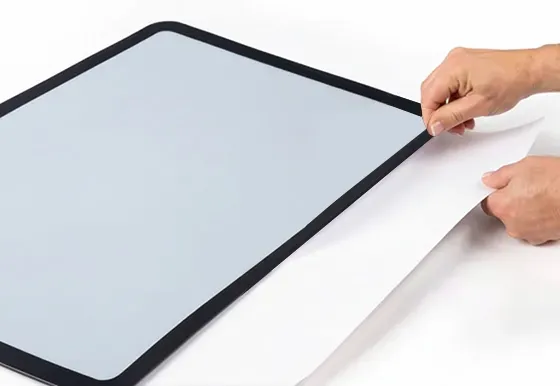
- Custom Counter Mats – Durable laminated mats for bars, restaurants, and retail
- Industrial Laminating – Heavy-duty films for outdoor signage and floor graphics
Frequently Asked Questions About Textured Lamination Posters
❓ What is a textured lamination poster?
A textured lamination poster is a poster that has been laminated with a film that adds physical texture such as linen, canvas, leather, or soft-touch finish. This creates a premium, tactile feel and reduces glare and fingerprints.
❓ How much does large format lamination cost?
Pricing for large format lamination depends on size, quantity, and finish type. Contact us for a free quote based on your specific project requirements.
❓ Can you laminate oversized banners and posters?
Yes! Our large format lamination equipment handles materials up to 60 inches wide, including trade show banners, window clings, and oversized posters.
❓ What's the difference between thermal and pressure-sensitive lamination?
Thermal lamination uses heat to activate adhesive and is best for indoor signage. Pressure-sensitive lamination uses a sticky backing and is essential for items that can't handle heat or for mounting to foam board.
Need a Pro Finish?
Don't trust your large format investment to a pouch laminator. Whether you need massive large format lamination , durable floor graphics, or want to explore the luxurious feel of textured laminates for your textured lamination poster, our production team is ready to help.
Contact us today for a free lamination quote or send us your file to get started!
Featured Products
Printed Product
Buy Now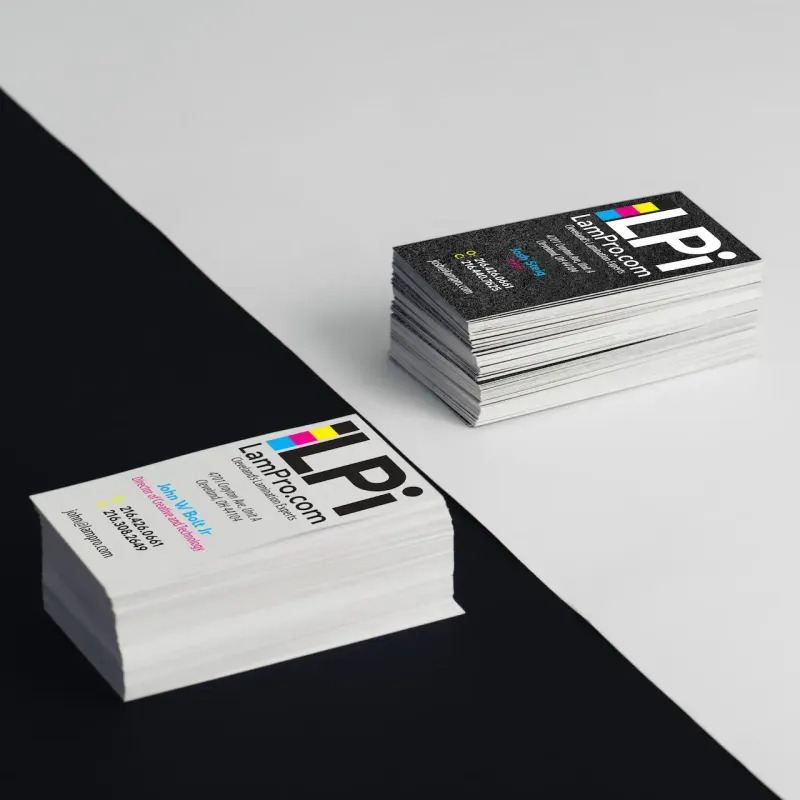
Business Cards
Buy Now
Best Value Business Cards
Buy Now
Silk Business Cards
Buy Now
Gloss Business Cards
Buy Now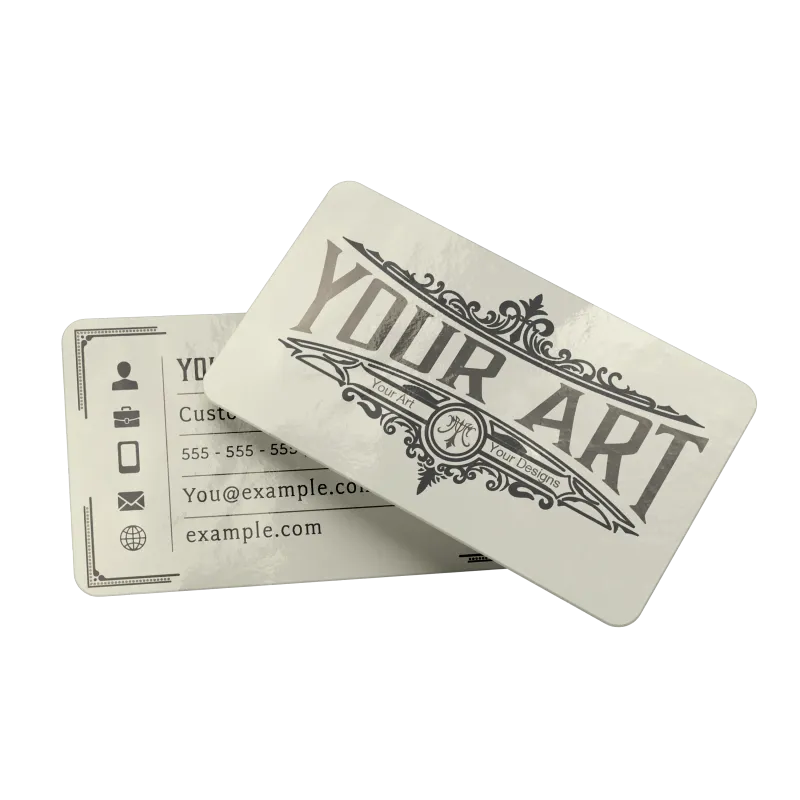
Lamination Business Cards
Buy Now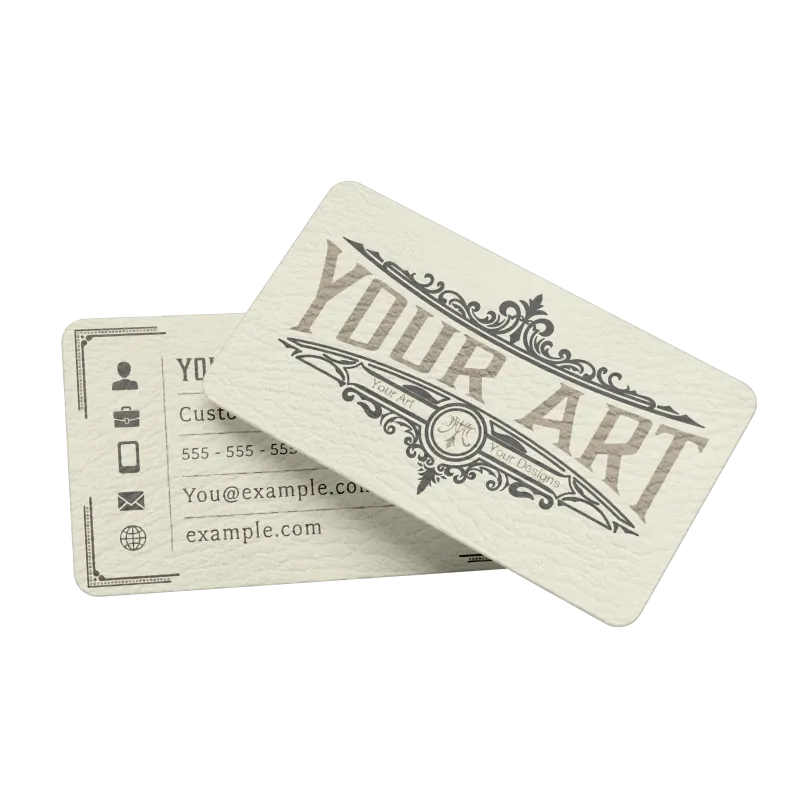
Specialty Business Cards
Buy Now
Postcards
Buy Now
Posters
Buy Now
Event Badges / VIP badges / Admission Badges
Buy Now
Wristbands
Buy Now
Metallic or Neon Printed Products
Buy Now
Read More...